Contact your local expert
The CRETE House
信息

location_on Location: St. Louis, Missouri

date_range Date: 2017

architecture Architect: Team WashU

emoji_objects Solutions & technologies: Cladding

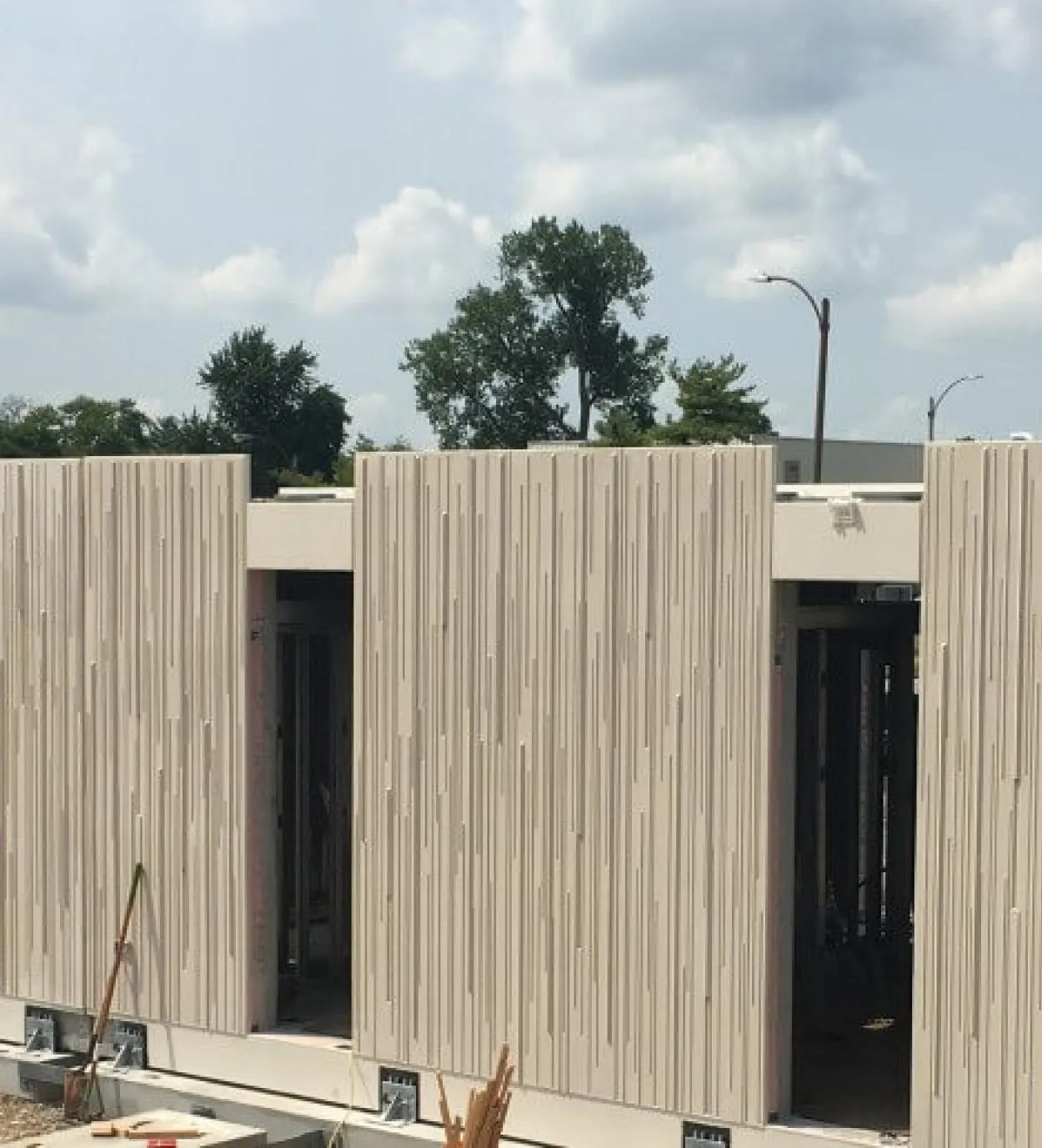
The thin, lightweight Ductal® sandwich cladding panels met the project team’s requirements in order to contribute to the building’s energy efficiency. The panels also met requirements for aesthetics, cost and sustainability. 
The U.S. Department of Energy Solar Decathlon is described as a “life-changing competition for collegiate students and an intensive course in sustainability for consumers”. Participating student teams spend almost two years designing and building solar-powered houses that are cost-effective, energy-efficient, sustainable and attractive.

Solar Decathlon

crete_house_4.jpg

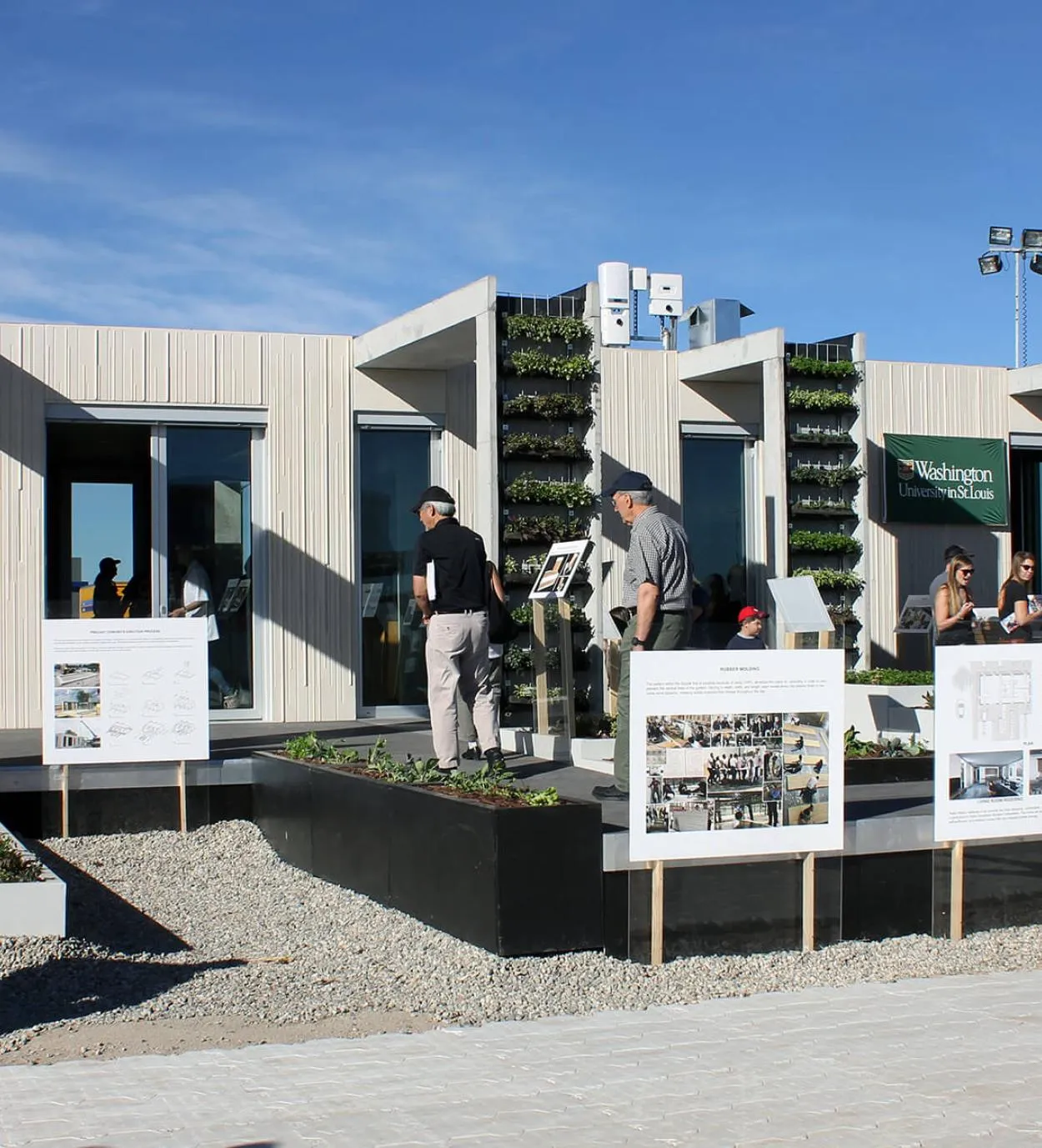
At the 2017 competition in Denver, Colorado, “Team WashU” (100+ students from the Sam Fox School of Design & Visual Arts and School of Engineering & Applied Science at Washington University in St. Louis, Missouri), secured second place in the Architecture category for their unique project called “The CRETE House”, an innovative, 995 square foot structure built entirely with prefabricated concrete. This includes an energy-efficient cladding system consisting of six large (12 ft x 22 ft wide), thin (1 inch) precast sandwich panels made from Ductal® Ultra-High Performance Concrete (UHPC).

Contexte

crete_house_1_1.jpg

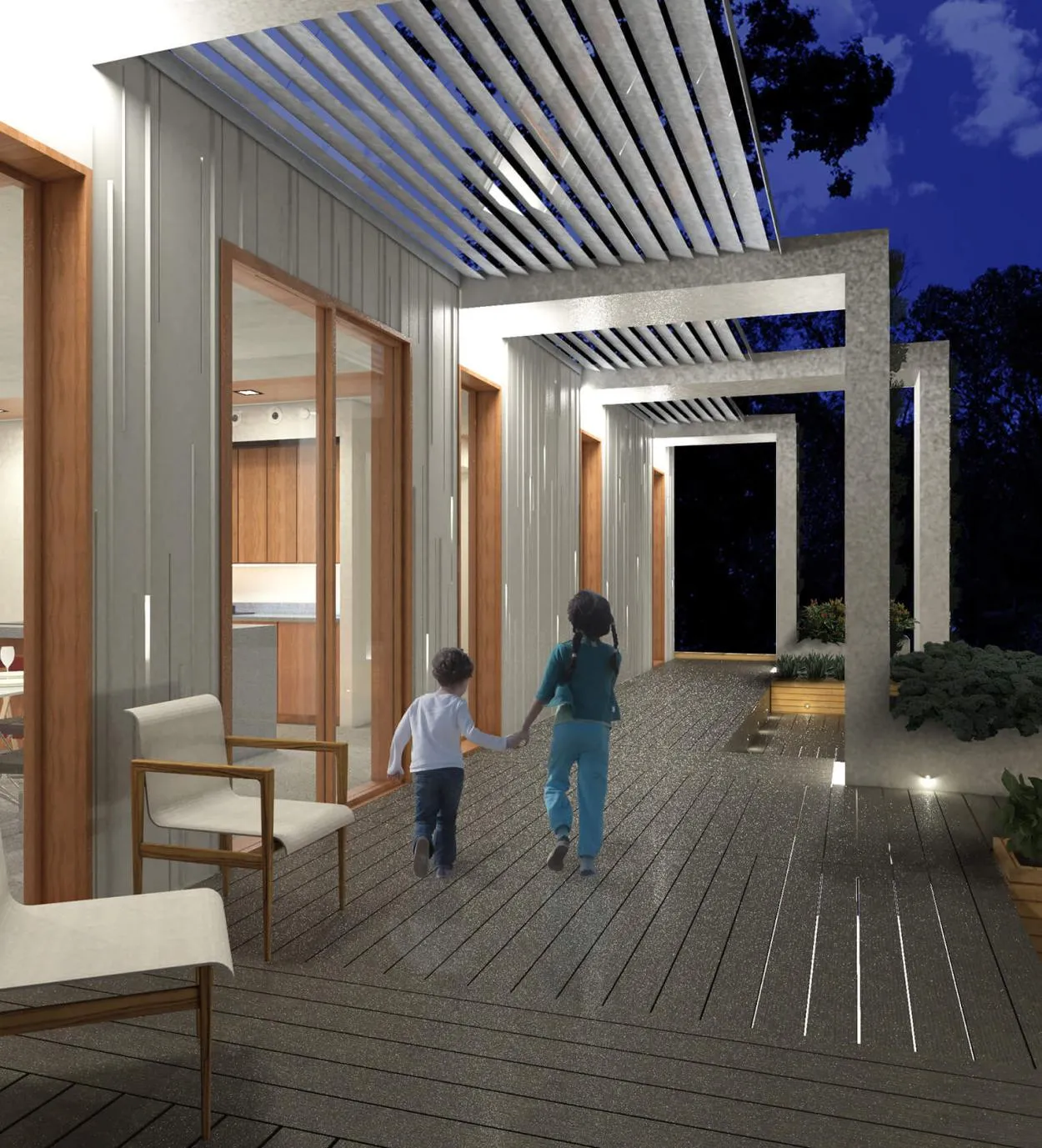
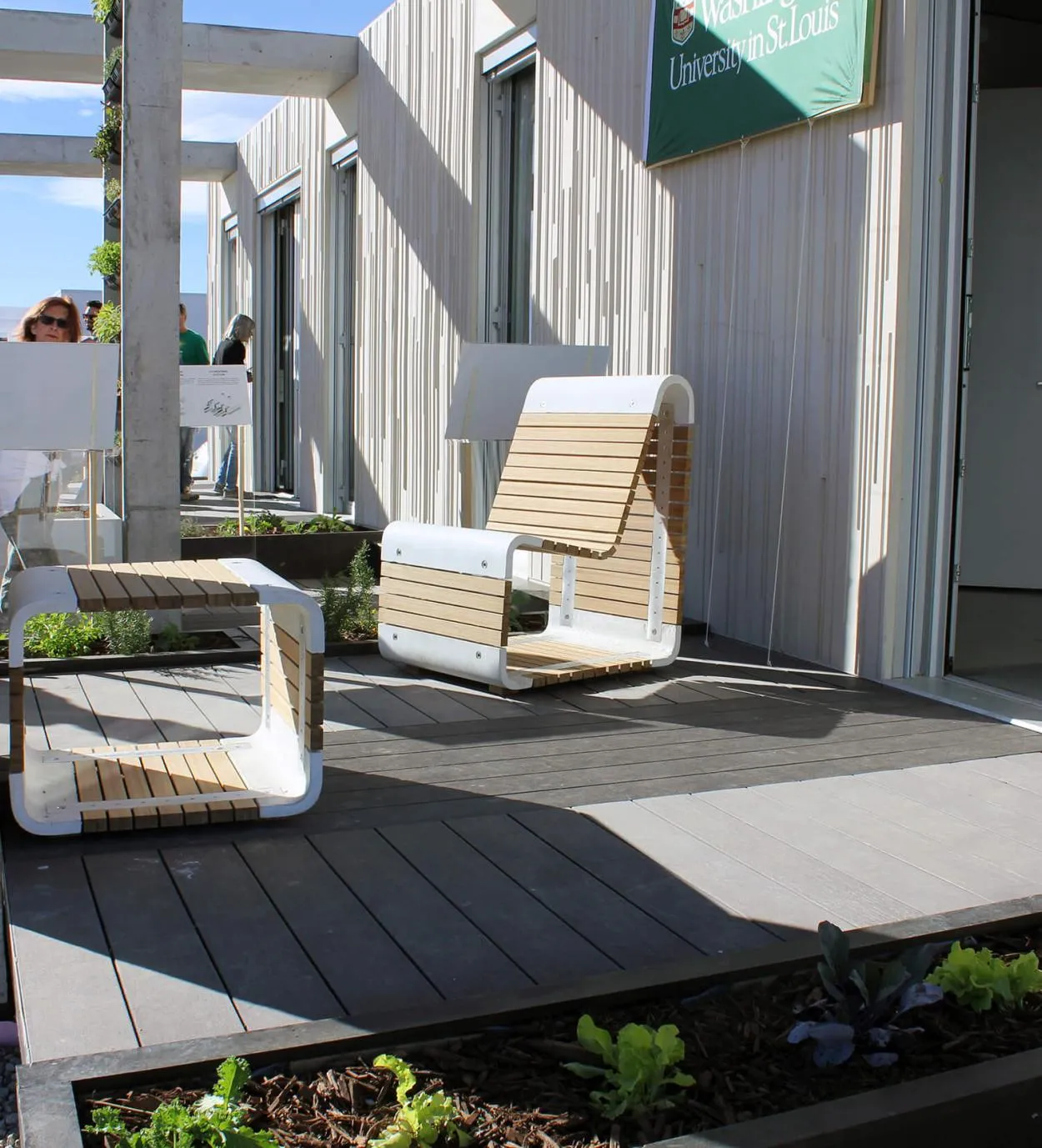
Oversized gutters provide shade and extend the living space outdoors, while a water collection system and vertical planters support hydroponic gardening. The design also demonstrates that concrete is a viable, sustainable building material and a beautiful, highly durable alternative to wood construction. Thanks to its ultra-strong envelope, the home is extremely resilient against fire, moisture, mold, insects, seismic activity and harsh weather conditions.

Description

crete_house_2.jpg

Team WashU worked with the Precast/Prestressed Concrete Institute (PCI) to design and cast the Ductal® sandwich panels, which are about 30% lighter than standard precast concrete panels. The panels are connected with bolts, which contribute to significantly reduced labor and material waste compared to traditional connection methods. Altogether, five inches of insulation was placed on top of the 1 inch Ductal® panel. (Typical sandwich panels have 3 inches of insulation because of the 3 inch concrete layer replaced by Ductal®).

Optimization

crete_house_3.jpg

相册

crete_house_4-1.jpg
crete_house_1_1.jpg
crete_house_2.jpg
crete_house_3.jpg

Discover our projects

The architect's bet was to keep a mineral facade while drastically improving the thermal performance of the building.

New residential building of 120 flats with contemporary architecture.

With a thickness of only 16 mm, the elegant, durable and cost-efficient Ductal® UHPC rainscreen cladding solution has proven to be the most economical option for the 315 apartments' renovation of the Chaperon Vert area in Gentilly.

Unique Ductal® Cladding provides high durability and aesthetics for an urban fire station frequently exposed to harsh climatic conditions.

Economic heart of the West, Oran is the second most populous city in Algeria and has few large shopping centers.

The emblematic Tour Cèdre in la Défense – Paris business district- will have a brand new renovated cladding in 2021 thanks to the application of Ductal® Cladding and Ductal® Envelope.

Inaugurated in September 2014, the new Porte de Vanves student residence boasts 67 accommodation units in a bow-shaped building that meets the architectural constraints of a small, triangular building plot.

The project is part of the development of a new district in Geneva, the largest private real estate project in Switzerland. This real estate project covers 11 hectares and provides for the construction of 280,000 m2 of gross floor area on 26 buildings.

The complex brings together the Health Professions Training Institute (IFPS) and the Faculty of Medicine and Pharmacy. The project includes three 250-seat amphitheatres, practical work rooms, and accommodates up to 2,500 students and staff.

Built in the 1990s, the 70,000 m2 building was clad with a stone whose durability had deteriorated over time. The renovation of the building also allowed a thermal optimization of the facade.

Designed by Architecture Studio, this new building is a major part of École Spéciale des Travaux Publics (ESTP’s) new dynamic.

For this project, the three important aspects were aesthetics, durability and longevity with a jobsite localisation in the earth of Paris.