Contact your local expert
Fondation Louis Vuitton
Información

location_on Location: Paris, France

date_range Date: 2014

architecture Architect: Frank Gehry

emoji_objects Solution and technologies: Envelope

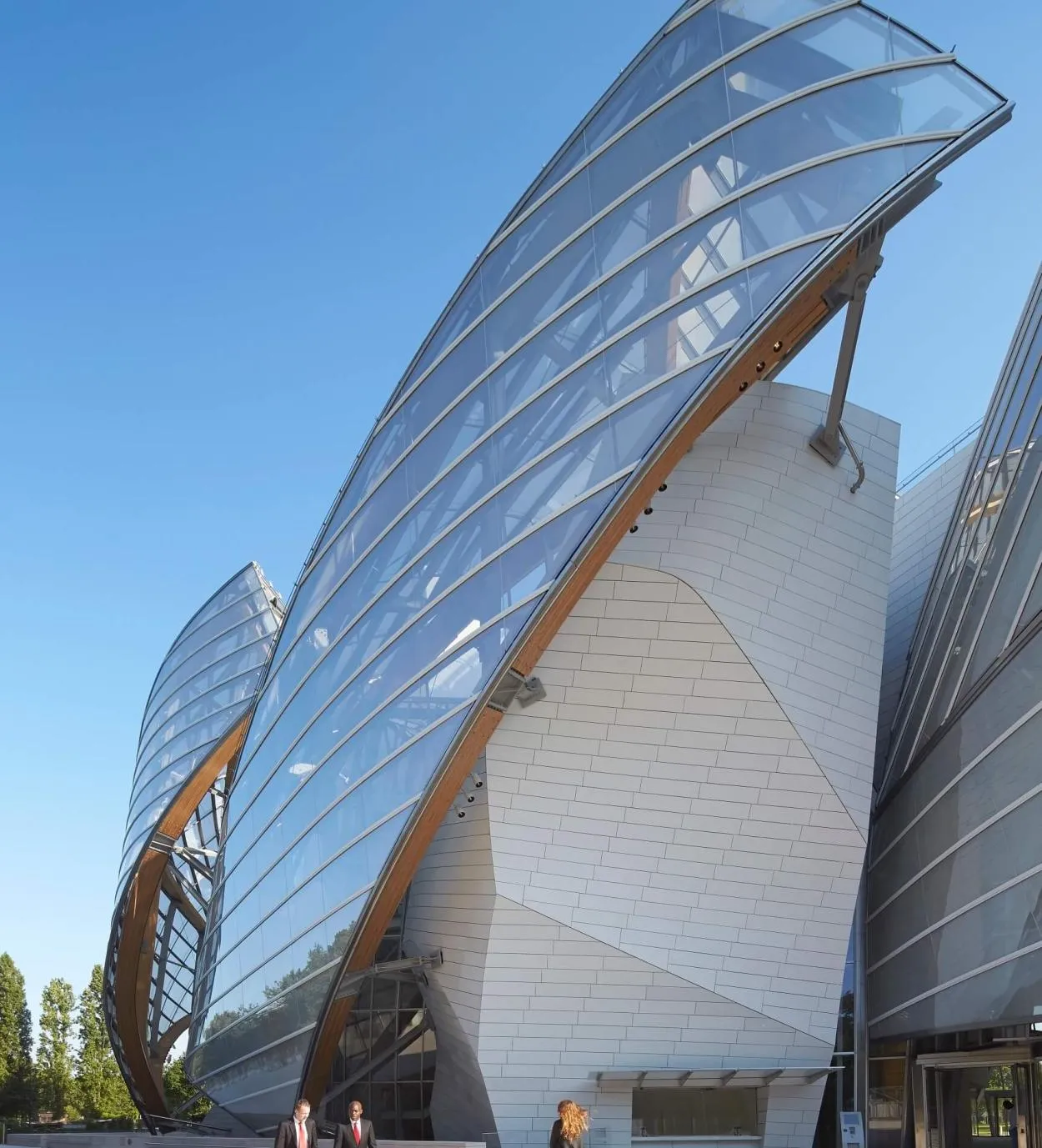
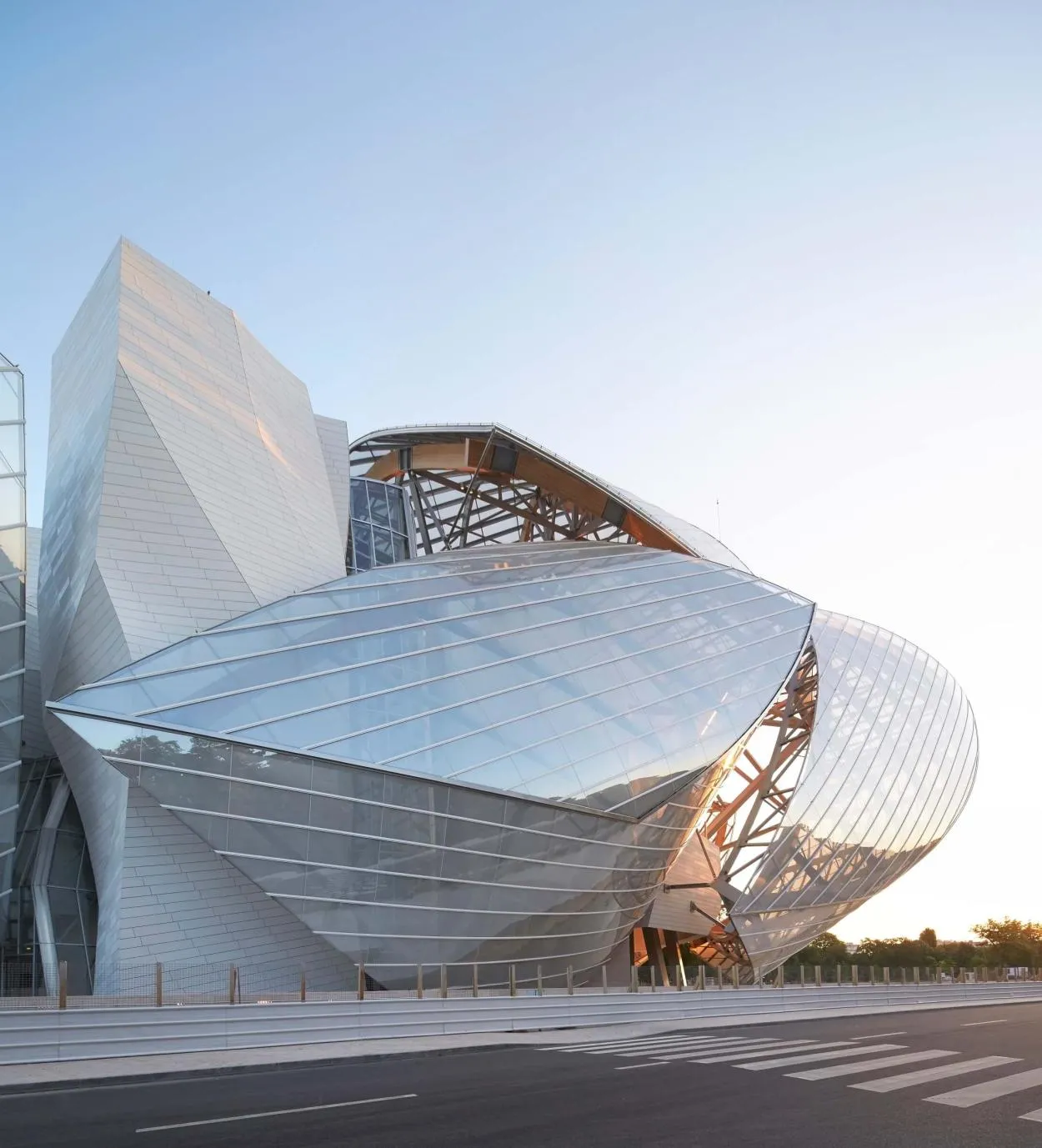
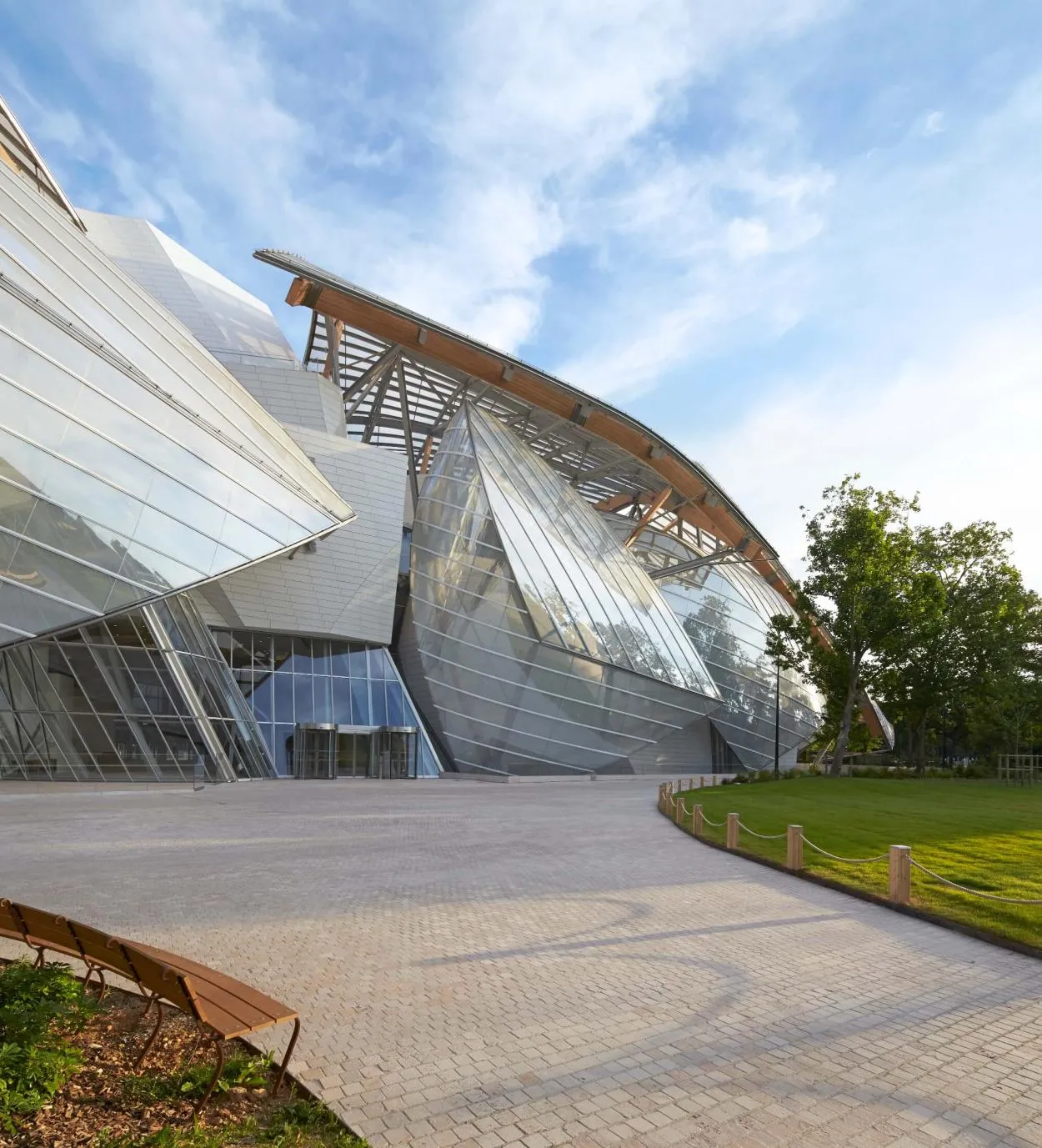
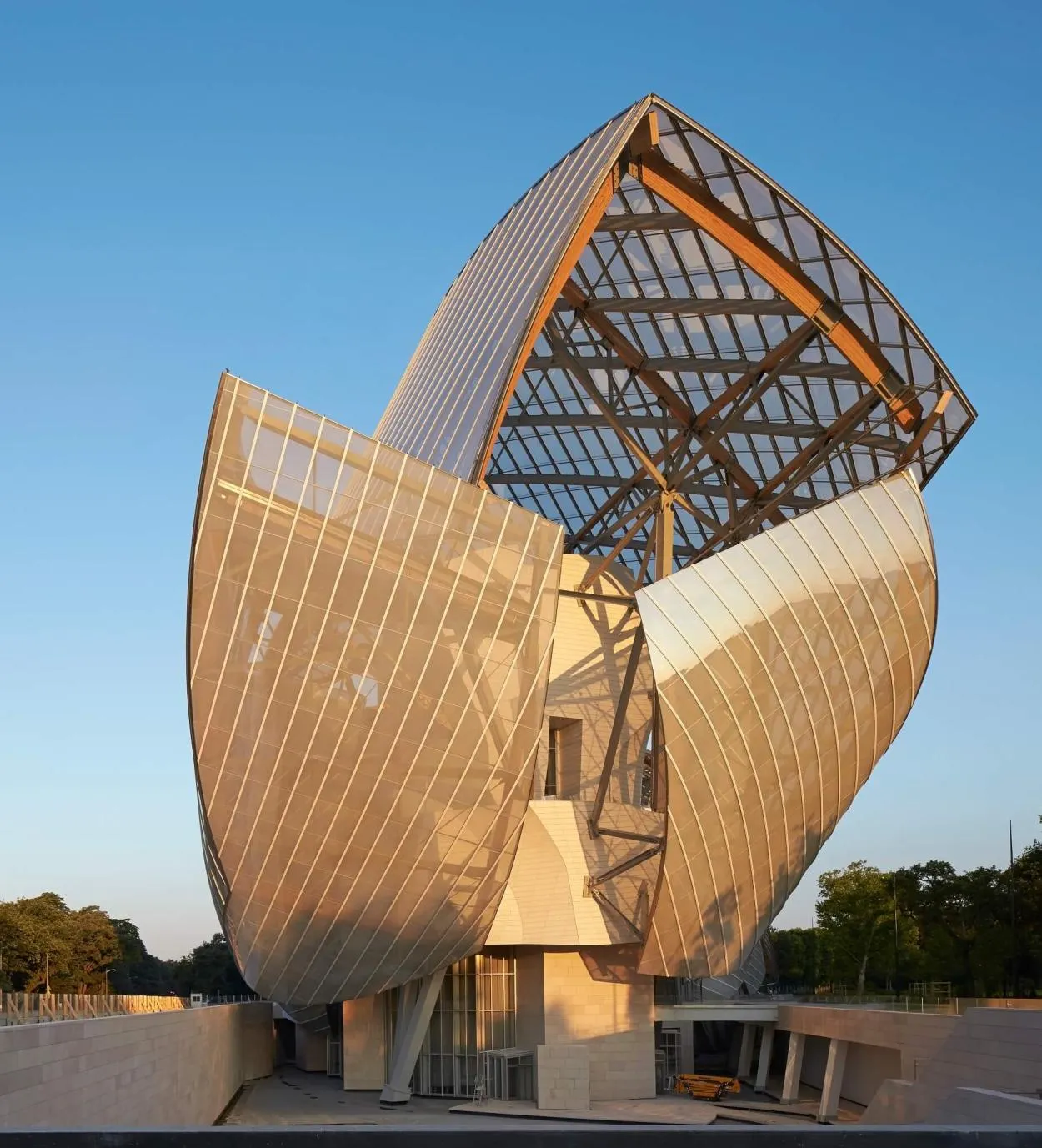
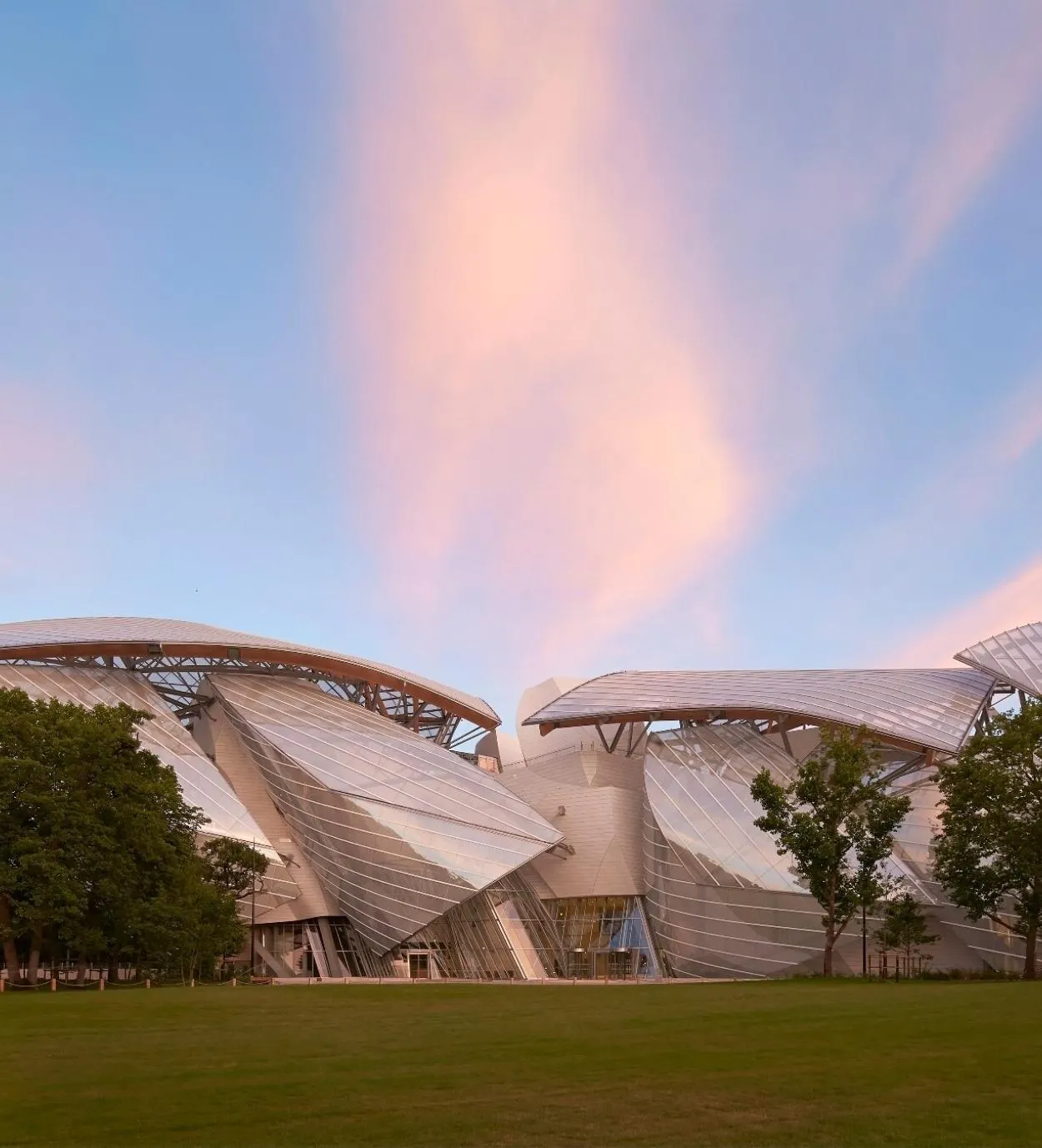
The Canadian-American architect Franck Gehry, laureate of the Pritzker Architecture Prize in 1989, has designed a building swathed in an array of vast glass sails (large glass surfaces) and consisting of concrete facades with geometric shapes as original as they are complex known as icebergs... Icebergs dressed in Ductal® Envelope, using a unique manufacturing process that has received an award from the French Fédération de l'Industrie du Béton. 
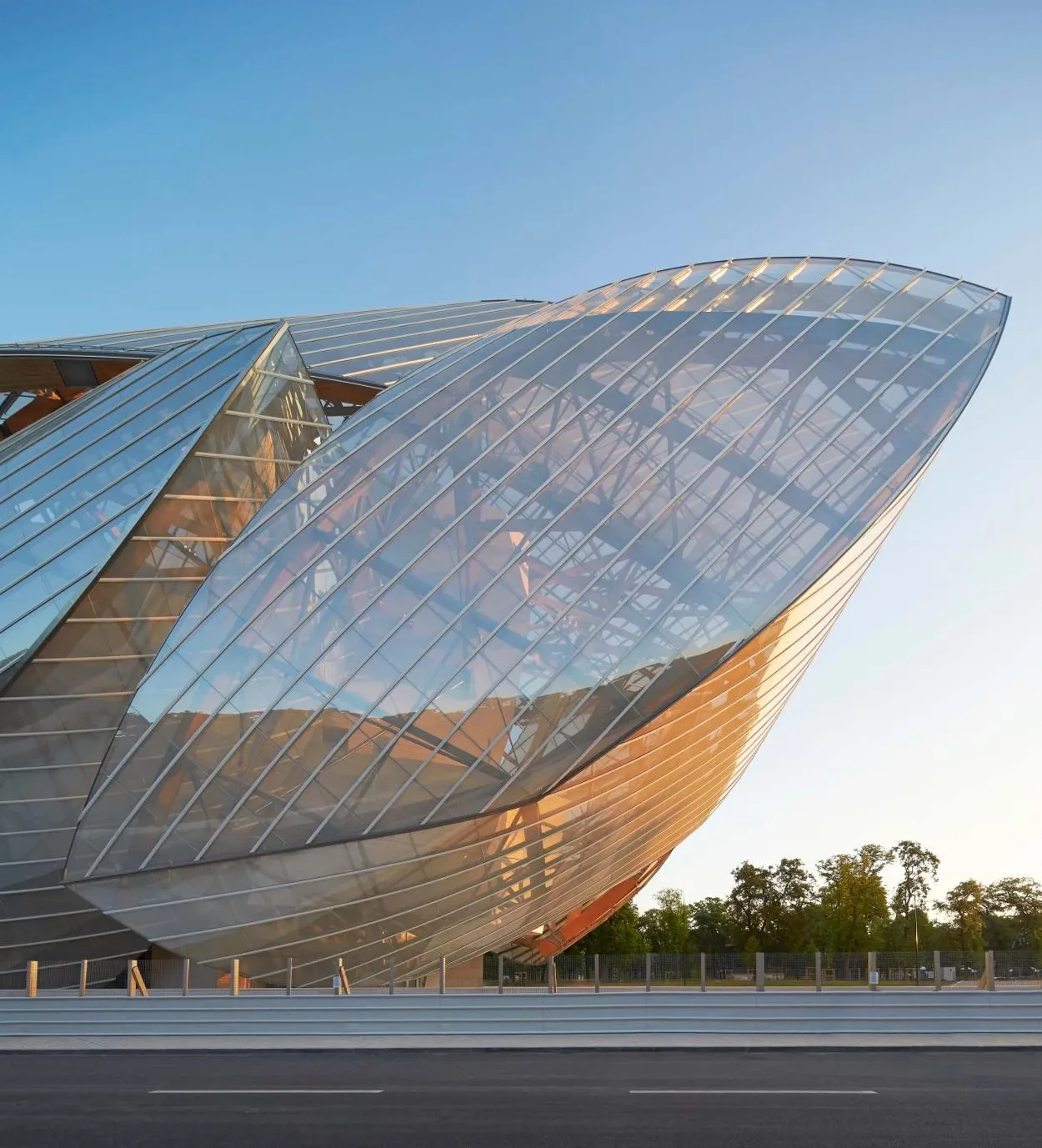
The Fondation Louis Vuitton for Creation, a magical and enchanting building designed by Frank Gehry at the request of Bernard Arnault, President of the LVMH group, was inaugurated in October 2014 in the heart of the Bois de Boulogne in Paris.

Context

lv_context.jpg

A masterpiece of architectural design, the Fondation Louis Vuitton has met a host of technological challenges that have necessitated six years of work, involving some 120 architects and engineers. The Fondation Louis Vuitton building sits beneath a majestic composition of large glass sails. The opaque facades, grouped in "icebergs", needed to be a brilliant white, forming a perfect fit on a highly complex geometry, while guaranteeing outstanding durability as requested by the Client for the whole building. We have taken part in this extraordinary adventure and tackled the challenge by proposing a material that meets the architect's aesthetic and technical expectations.

Challenge

lv_challenge.jpg

The technical challenge posed by the random geometry of the 9,000 m² facade of the Fondation Louis Vuitton was met by manufacturing 19,000 Ductal® panels of which 16,000 with varying curvatures. Ductal® Envelope rapidly proved itself the only material capable of meeting the expectations of this project due to its ultra-high performance in terms of durability, surface quality, thin panel thicknesses, casting-based manufacture and ductility. It has the important advantage of being able to withstand significant deformations without failure. Its organic fiber formula gives it a mineral materiality that is produced here in a very thin layer, just 25 mm, thus guaranteeing maximum weight reduction of the group of panels lining the facade.

Description

lv_description.jpg

While the material met the project's expectations, a process still had to be designed to enable industrial-scale manufacture of the 16,000 cladding panels, with random 3D geometries, and to fit them to the curve of the 9,000 m2 facade. It was obviously not feasible to make a number of moulds equal to the number of different geometries. Ductal® was able to propose an effective technical solution based on its considerable experience in materials manufacture and laying.

Conception

fondation_louis_vuittonfrank_gehry_lvmh_paris_vanity_fair_shoot-huftoncrow_025.jpg

We therefore developed the Vacuum Moulding (VM) process patented by LafargeHolcim in 2008. This process uses a unique flexible mould that can be adapted to fit any curve. The desired geometry is provided by a CNC-machined polystyrene template: the deformable mould is positioned on this template using a combination of vacuum pockets. The flexible silicone mould provides a perfectly smooth, velvety surface with the result that each panel can be given a potentially unique curve, while still enabling Bonna Sabla, the partner precasting company, to limit the number of moulds used - a critical factor in the manufacturing cost. Manufacturing and fitting tolerances were especially challenging: the inter-panel horizontal joint is 10mm, while the vertical joint is only 7mm. These limitations required the precaster to set up a strict geometry control process. Manufacturing expertise, combined with the fixing system proposed by the RFR and TESS facade design offices, ensured perfect visual continuity between the joints.

Manufacture

lv_manufacture.jpg

The aesthetic appeal of the 9,000m2 Ductal® panel facade is a fundamental component of the Frank Gehry project. Being displayed on the facade means that the panels are exposed to all types of weather, as well as to dirt and deposits, etc. In order to guarantee the skin's high durability, a water and oil repellent protection solution proposed by our partner Guard Industrie underwent extensive testing in their laboratory. Guard Industrie carried out UV weathering tests, XX and even tested the effect of bird droppings, given that the wood is full of birds! A sacrificial anti-graffiti coating has been applied in areas accessible to the public. This protection and finish therefore play a major role in ensuring long-lasting preservation of the aesthetic features that Ductal® offers the Fondation Louis Vuitton.

Aesthetic

lv_aesthetic.jpg

Galería

fondation_louis_vuittonfrank_gehry_lvmh_paris_vanity_fair_shoot-huftoncrow_013.jpg
fondation_louis_vuittonfrank_gehry_lvmh_paris_vanity_fair_shoot-huftoncrow_020.jpg
fondation_louis_vuittonfrank_gehry_lvmh_paris_vanity_fair_shoot-huftoncrow_025-1.jpg
fondation_louis_vuittonfrank_gehry_lvmh_paris_vanity_fair_shoot-huftoncrow_027.jpg

Descubre nuestros proyectos

La Part-Dieu new shopping center extension in Lyon has opened in November 2020. Its 32,000m² make it the largest downtown shopping center in France.

Rolland Simounet built the Lille Museum of Modern Art near Parc du Héron in Villeneuve d'Ascq, France in 1983. Architect Manuelle Gautrand recently renovated and expanded the existing building.

A beautiful façade for the new Louis Vuitton "Maison" store in Miami, Florida has a unique, seamless appearance like a white screen catching the sunlight. This artistic creation was achieved using a combination of flat and curved white Ductal® UHPC panels that are just 25 mm thick and produced in two different patterns to mimic the iconic Louis Vuitton flowers.

This is a project for the extension and redevelopment of the Cepovett's head office, the French head of professional clothing, located in Gleizé, in the Rhône.

“DUMBO” (Down Under the Manhattan Bridge Overpass), a historic neighborhood in Brooklyn, New York has been transformed in recent decades. Today, the former industrial zone is a bustling, mixed-use area filled with galleries, shops and lofts.

Commissioned directly by venteprivée.com’s CEO Antoine Grangon for architect Jean-Michel Wilmotte, the building known as Le Vérone proudly shows off a lattice façade in white Ductal®, visible along the A1 highway across from the Stade de France, on the outskirts of Paris.

The city of Sedan entrusted architect Philippe Gibert with the construction of the Torcy-Cités Community Centre. The façade was covered with perforated panels of Ductal® Envelope, allowing freedom from the limitations of natural lighting and glazing protection.

The semi-flowable nature of Ductal® Envelope facilitated the pouring of 3D panels with a fine yet nubby Lego®-style texture. Only 3 cm thick, their lightness are made for fast installation and adjusting.

The construction of the Belleville Daycare, designed by architect Bruno Rollet, proves that Ductal® is part of a reflection on green building design.

The agency of Philippon-Kalt Architectes-Urbanistes was entrusted with the renovation and expansion of a unique care facility (EHPAD), exclusively dedicated to people suffering from Alzheimer's.

Ductal® adorns the new train station in Kenitra, one of the strategic points of Morocco’s high-speed rail route between Tangiers and Kenitra, and a new symbol of economic development in the country.

Apex House is part of Grainger’s Seven Sisters Regeneration project located on the corner of Seven Sisters Road and Tottenham High Road in London.163 new residential units across two towers and four townhouses with a mixture of tenures, as well as communal roof terraces, amenity space and a new commercial market space to accommodate the local shops.