Ductal® Archistructure allowed the construction of large canopies with a design and budget similar to metal. The watertightness and durability of Ductal® make it an ideal material for the roof of this public structure.
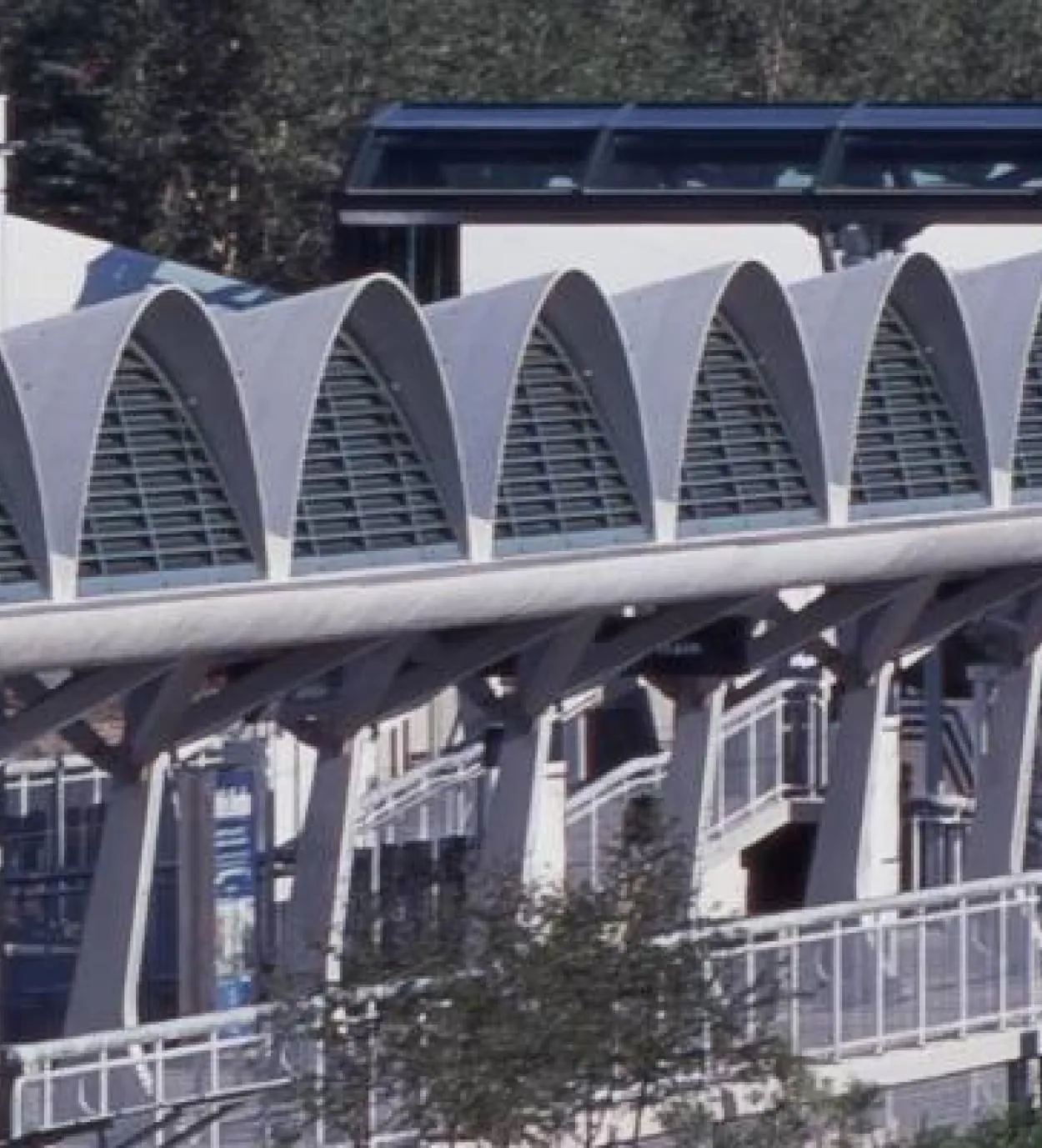
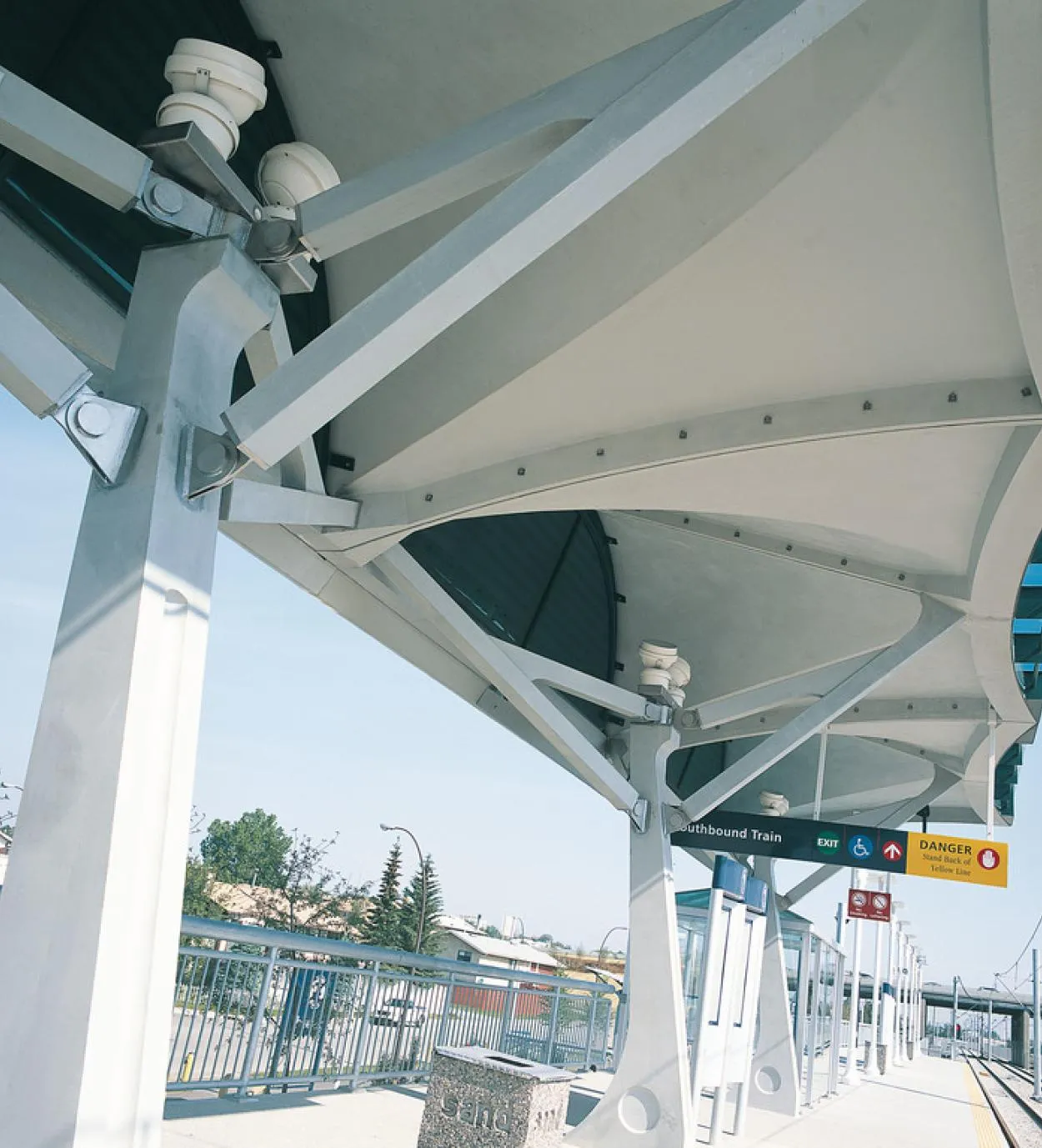
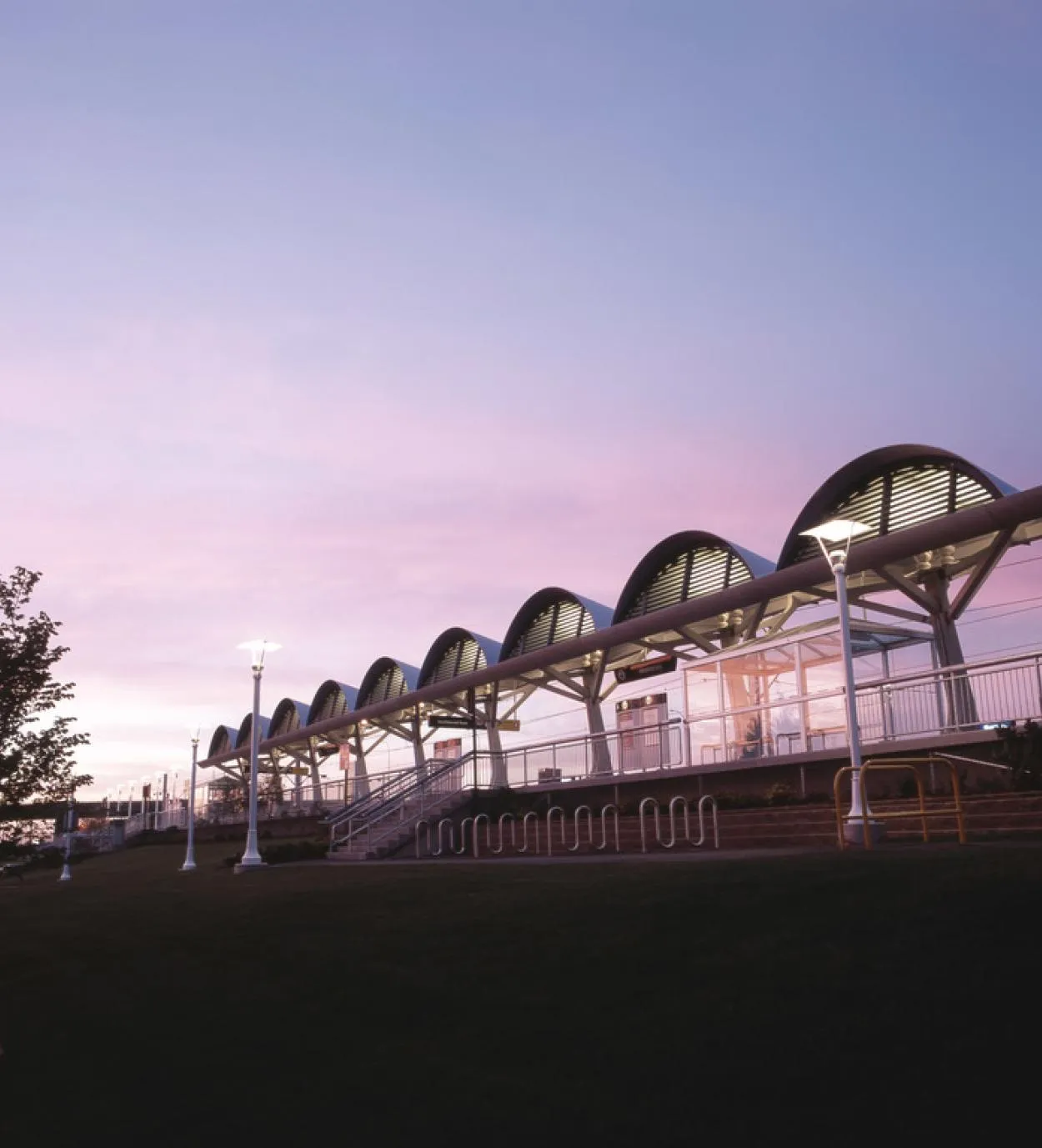
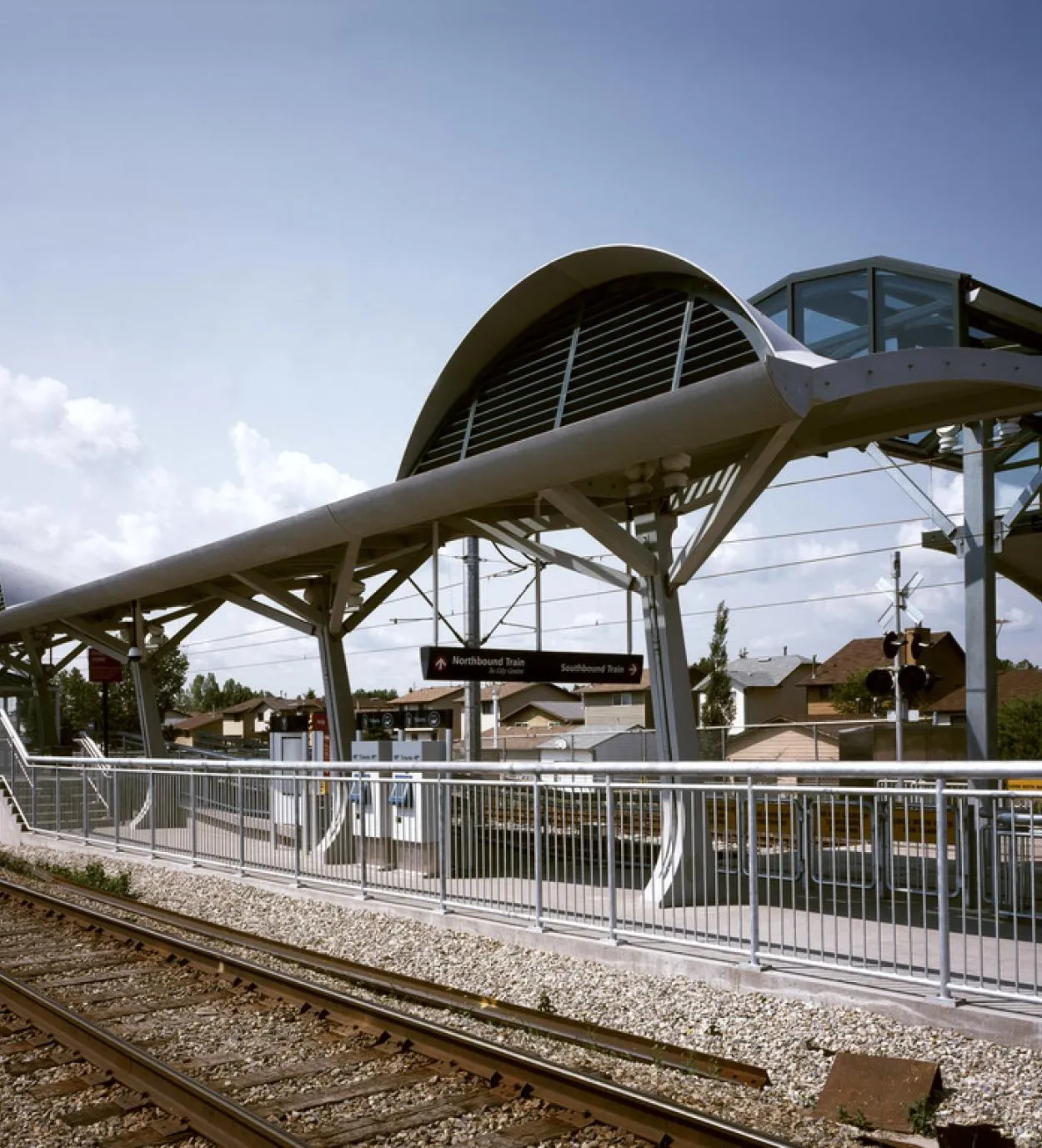
Stantec Architecture Ltd. designed the platform roof for the Shawnessy light rail transit (LRT) Station in Calgary, Canada. The canopies, made with Ductal® Archistructure are just 2 cm thick, supported on singular columns, installed on the platform and attached in groups of three. Additionally, three Ductal® struts are connected to each of the columns to support the canopy roof system. It took 80 m3 of white Ductal® with organic fibres to pour the 24 canopies each 5 m wide and weighing 750 kg. Titanium oxide was added to the concrete to provide an extra-white appearance.
Description
The design was based on calculations and testing (finite modelling). As well, the project required extensive testing of a full-scale prototype in order to establish critical load capacity. A series of tests included snow-load and wind uplift. Testing of the prototype took place at the University of Calgary laboratory. A mould was designed to cast half a canopy at a time. The two halves of each canopy were then assembled by means of a central rib.
Tests
The design of the steel mould had to take several factors into consideration related to Ductal® characteristics. The ultra-smooth surface finish of the canopies required injection moulding in a vertical mould placed on edge. To facilitate shrinkage during the initial hydration phase, the mould was rotated 90° after 12 hours which then provided support for the material until it gained sufficient strength for demoulding. This facilitated the removal of the top of the mould and easy demoulding. Last, the mould was returned to 180° so that the canopies were in their natural position for demoulding.
Conception
After two-by-two assembly of the canopy halves, the complete canopies were transported to the site. The Ductal® columns were first fitted into the platform; then the struts were fastened to them and the canopies were attached and connected.