



Contact your local expert
Nipigon Cable
信息

location_on Location: Ontario, Canada

date_range Date: 2021

architecture Contractor: Ferovial/BOT JV

emoji_objects Solutions & technologies: Infrastructure

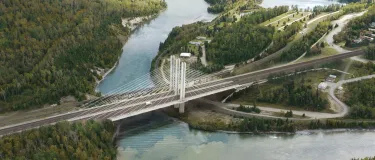
The new Nipigon River Bridge east of Thunder Bay, Ontario is the first cable-stayed structure on the Ontario TransCanada Highway system. The project started in 2013 on this four-lane, two-span bridge which will replace an aging, two-lane structure. The new bridge has three precast concrete towers with cables supporting a 252m bridge deck and separate sidewalk for pedestrians. The center pier reaches a height of 51m above the bridge deck.
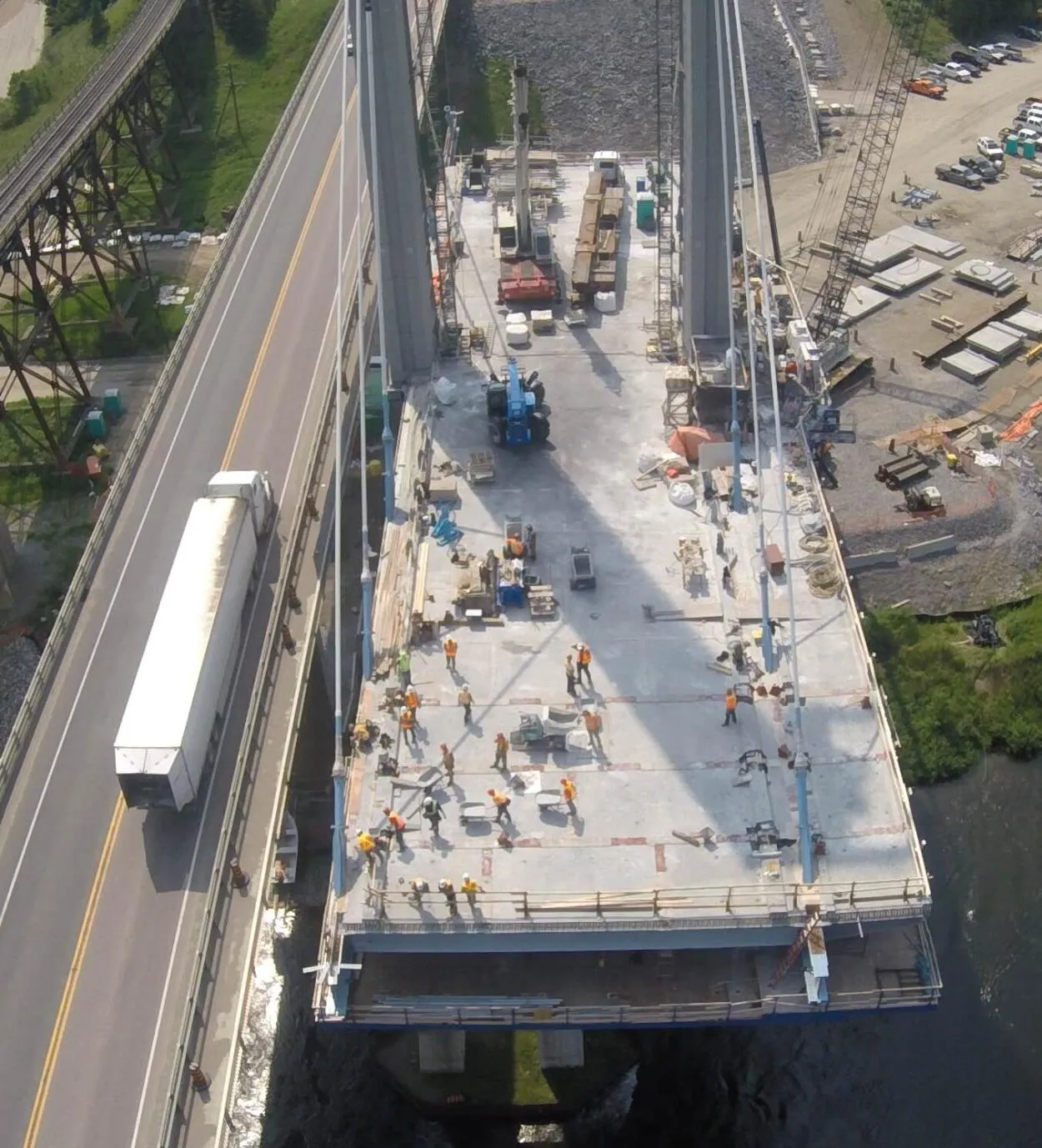
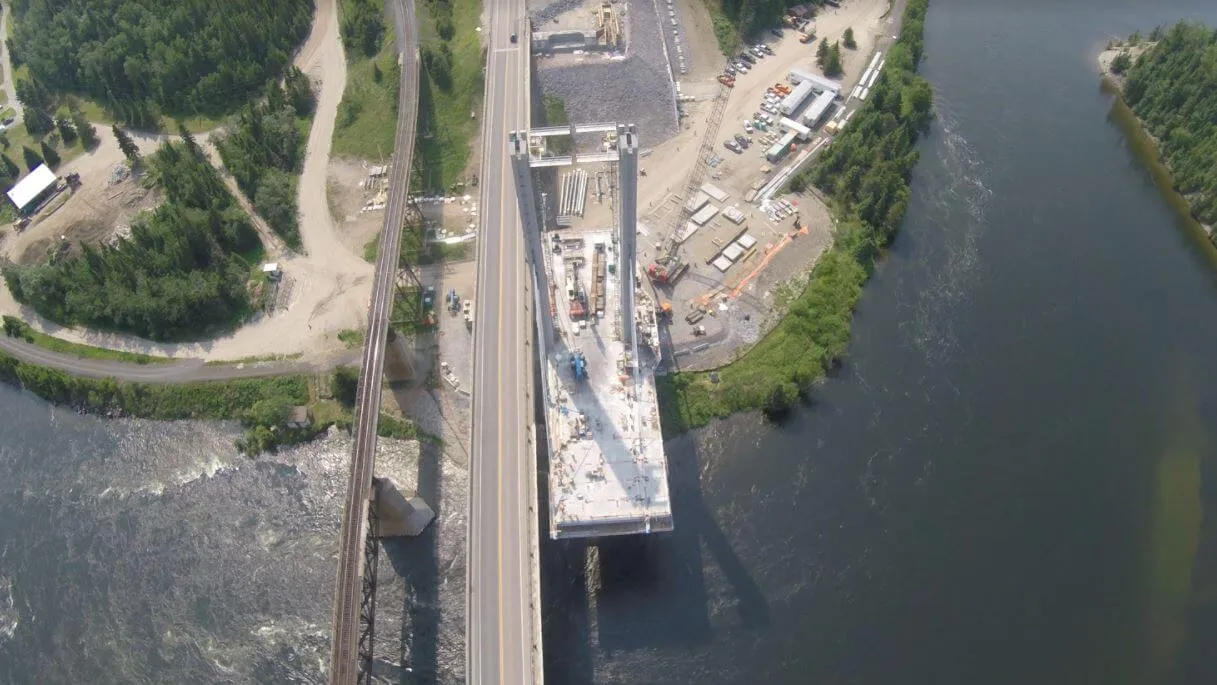
In a remote area frequently exposed to harsh environmental conditions, the project required the use of high and ultra-high performance materials such as Ductal® that provide superior strength and long-lasting durability. Key challenge was to ensure the material used for connections was able to achieve 80Mpa in less than 24hrs in order to maintain further section installation as the bridge was built from the center out towards the abutments. As such, the Ministry of Transportation Ontario (MTO) chose Ductal® ultra-high performance concrete Infrastructure solution for the connection of precast tower segments to cast-in-place tower segments and the connection of longitudinal and transverse joints to steel girders and beams. Importantly, the use of Ductal® on these structural connections also allows for rapid cable-stayed construction.

Challenge

nipigon_hmm_aerial_photo.jpg

The MTO (Northwestern Region) was a collaborator and pioneer in the early development and use of field-cast Ductal® connections in North America.

Bot Ferrovial Nipigon Joint Venture (BFNJV) managed the $106-million contract, with full completion in 2017. By the time it's done, this innovative project will have supported approximately 1,000+ jobs. According to Glen R. Murray, Minister of Transportation: "Our government is improving infrastructure across the province, which creates jobs and strengthens our economy. Projects such as this will help ensure our roads are safe and in good condition for years to come".

Partnership

top_view_construction.jpg

相册

nipigon-mto_photo1.jpg
top_view_construction.jpg
bridge_view_from_deck.jpg
nipigonriverbridge-aerial-pic-3.jpg

Discover our projects

The Gardiner Expressway structure rehabilitation is part of the City of Toronto’s Strategic Rehabilitation Plan in order to rehabilitate and keep the structure in a safe and operable condition for now and the future.

The four tracks of Zurich Airport's underground railway station have been renovated and lowered without interrupting traffic.

Mosquito Creek Bridge was in need of a rehabilitation due to its age and deterioration to bring it up to modern seismic standards. This bridge was the first bridge constructed in Canada to use pre-stressing, completed in 1952 andis located in North Vancouver, near Marine Drive and Fell Ave.

Eastbourne Arndale Shopping Centre is a £85 million redevelopment including 22 retail units, seven restaurant units, a multiscreen cinema and a significant extension to the multi-storey car park.

The concrete of the abutments and central pillars of the Grafstal road bridge (municipality of Lindau) above the A1 motorway showed damage due to chloride infiltration.

Dominie Creek bridge lies on ancestral territory where Caltrans and Tolowa Dee-ni’ Nation worked together to replace the old dilapidated box culvert structure. The finished bridge has an emblem of spawning salmon at each abutment barrier wall which was inspired by the locations salmon and trout spawning.

The Arlington Memorial Bridge is located in Washington DC which carries traffic over the Potomac River. The original structure used masonic decorative features which gives this bridge an iconic look.

Put into service in 1975, the Caderousse dam is a storage reservoir on the Rhône River in Vaucluse, France.

A structure that symbolizes US bridge engineering of the 1930s, the Pulaski Skyway, which links Newark to Jersey City has been partially closed as it undergoes a considerable rehabilitation - the largest in its history. The project was a perfect opportunity for the Federal Highway Administration (FHWA) and the New Jersey Department of Transportation (NJDOT) to take full advantage of...

The rehabilitation of Mauves-sur-Loire bridge consists in substituting the existing deck (3,500 m²) made of brick vaults with a thin deck made of thin precast UHPFRC slabs. The main objective of the project is to upgrade this historic landmark by increasing its bearing capacity and allowing the addition of cantilevered footbridges.